by Kerrin Ross Monahan
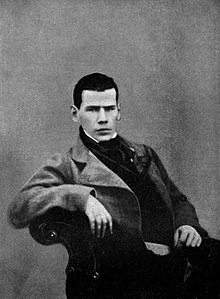
“I am convinced that nothing has so marked an influence on the direction of a man’s mind as his appearance, and not his appearance itself so much as his conviction that it is attractive or unattractive.” – From Boyhood
In Leo Tolstoy’s stories Family Happiness (1859), The Death of Ivan Ilych (1886), and The Kreutzer Sonata (1889), the author reveals a great deal about Russian society and family life. In each of these stories the characters discuss the themes of marriage, women, social aspirations, love and death. There is a definite progression in intensity of feeling, from positive and negative, as one moves from the first story to the last. One sees a gradual change from the relative gentleness, and, comparatively speaking, mild discontent of Family Happiness, to the horrifying physical violence and full-blown loathing in the finale of The Kreutzer Sonata. Each story is self-contained, of course, but when reading them one after another in chronological order, one can’t help wondering if Tolstoy himself didn’t feel that Russian family life was, in reality, gradually degenerating and disintegrating and that society was at fault.
Sergey Mikhaylych of Family Happiness seems to be the most insightful, sensible and well adjusted of the three. He believed that life was good and that the only certain happiness was to live for others (22). What was needed for happiness was a “quiet secluded life in the country with the possibility of being useful to people . . . who are not accustomed to have it done to them . . . which one hopes may be of some use.” Add to this, “nature, books, music, love for one’s neighbor . . .” (45) and of course, most important of all, wife and children.
Sergey was of the landed gentry, but rather than leading a life of dissipation in St. Petersburg or Moscow society, he was a prudent, practical, and hard working man-in-residence. He believed that “society in itself is no great harm,” but “unsatisfied social aspirations are a bad and ugly business” (65). He derided the “dirtiness and idleness and luxury of this foolish society . . .” (70). He only presented his young wife Marya to society in hopes that she would quickly get the surface glamour and excitement out of her system. As it turned out, not surprisingly, she was fascinated and thrilled with its brittle sophistication and glittering aura, and was taken up and lionized by everyone. An important Prince expressed great interest in her, as did an Italian Marquis, who made an attempted seduction. Princess D. had convinced Marya that Sergey’s character had become “very stiff and unsociable” (73). Thus it was that Sergey’s dim view of society was the correct one.
Ivan Ilych, unlike Sergey, was a person of “moderate means,” a member of the Court of Justice who wanted “to appear rich” (116), and whose increased salary was never quite enough to pay for his longed-for lifestyle. He was a social climber who shrewdly gravitated towards the “best circle” (108) and was very ambitious, weeding out “various shabby friends and relatives” so that only the “best people” remained (119). He would have loved to have been included in the high school milieu to which Sergey belonged but indeed he never would have admitted. He greatly enjoyed city life and hated it when he was transferred to the provincial backwaters, so he schemed tirelessly until it was arranged that he be posted in Moscow.
Ivan’s life’s aim was to lead a “decorous life approved of by society” (110), to do the “correct” thing and to stay within the limits of good conduct that society imposed. He felt that the “character” of life was that of “pleasant light heartedness and decorum” (114). He believed that one’s duty was those in authority said it was (105). Unlike Sergey, who married for love and companionship, he married, initially because it gave him “personal satisfaction,” but most importantly because it was considered the “right thing” to do by his “highly placed” associates (109). Marriage provided him with only the basic necessities of food, shelter, and sex. On his deathbed, Ivan’s wife and daughter make vacuous small talk, all the while trying to make a quick exit so they may go the theater. When Ivan finally dies, his coworkers immediately speculate on how they can possibly gain through promotion, and his wife tries (quite unsubtly) to get a larger pension.
In The Kreutzer Sonata, Pozdnyshev was a landowner and university graduate who saw marriage as a trap. It was a sale of women; they were put on the block by society (177), and were seen by men as existing solely for their own physical enjoyment. Love, Pozdnyshev felt, was really only lust, and “the life of our upper classes . . . is simply a brothel . . . (175). Sex was an unnatural vice (182), “abominable and swinish” (187). He maintained that sexual passion hindered mankind from achieving an “ideal of goodness attained by continence and purity” (183). On the one hand Pozdnyshev felt that women were not to blame; their families and society had perpetuated their sexual inequality and subservient state; but on the other hand he became outraged and insanely jealous when his wife, after bearing several children, started practicing contraception. (The only other alternative was to be a worn-out wreck, in ill health, and burdened with far too many children.) “The majority of the present educated world (society) devote themselves to this kind of debauchery (birth control) without the least qualm of conscience” (202). Pozdnyshev was trapped – he didn’t want an exhausted, hysterical, and neurotic wife, yet he grew insanely jealous of the calm, happy, healthy, and attractive woman that she had once again become.
Pozdnyshev blamed society for fostering a sexual double standard. He confessed that he had his first woman, at the age of fifteen, egged on by other boys. He said that respected adults had approved of this, saying that it was good for the health. Brothels were under government supervision and doctors were employed to screen out the sick women (170). So at a very early age, Pozdnyshev learned to by cynical and cold about sexual relations.
The three male characters in each of these stories all had strong feelings about family and society and if they had ever met, there undoubtedly would have been a lively exchange of thoughts (and possibly blows) between them. Sergey was a proponent of love and marriage and family, and saw society in general, and what he perceived it stood for as a contaminant, something to be avoided at all costs. Best to enjoy a calm, quiet life in the country with wife, children, and neighbors in a spirit of loving reciprocity. Ivan Ilych felt that living well in society, abiding by its rules, and enjoying its approval was everything. One put on a mask and pretended marriage was successful when in fact it was not. Work and acquaintances became the center of one’s life. Pozdnyshev was obsesses with the idea that marriage was simply legalized debauchery sanctioned by a perverted society. This belief inexorably led him to the ultimate horror, that of taking another human’s life. Both of them would have disagreed with both of them, undoubtedly denouncing them as degenerates.
Tolstoy’s stories are really about death in its many forms. Marya lost the romance in her marriage but a different type of love replaced it as she grew in maturity and wisdom and began to close the nineteen-year gap in age between Sergey and herself. Ivan Ilych lost his life through terminal illness, but even worse, he realized just before he died that he had been dead all along; he had only simply existed. While living a “most simple and most ordinary and therefore most terrible life” (104), he wasn’t living at all. “Yes, it was the right thing” (154). In Pozdnyshev’s mind, he had been dying most of his life. To him, sex was a form of death and he had been actively practicing it and had been tormented by it from puberty. This obsession with sex was the main reason he murdered his wife. He felt that since almost all of society indulged in sex, it was doomed as well. (It might be considered a sign that society itself was saying when it acquitted him of murder.)
Sergey and his family successfully insulated themselves from their society and they were able to maintain their closeness and cohesiveness. Ivan’s family willingly embraced society and was ruined by it. Pozdnyshev was tainted by society even before he married, causing him to destroy his wife, and, for all intents and purposes, himself and his children. Thus Tolstoy has successfully uncovered the real murderer of the family – a sick and malevolent society.