by Kerrin Ross Monahan
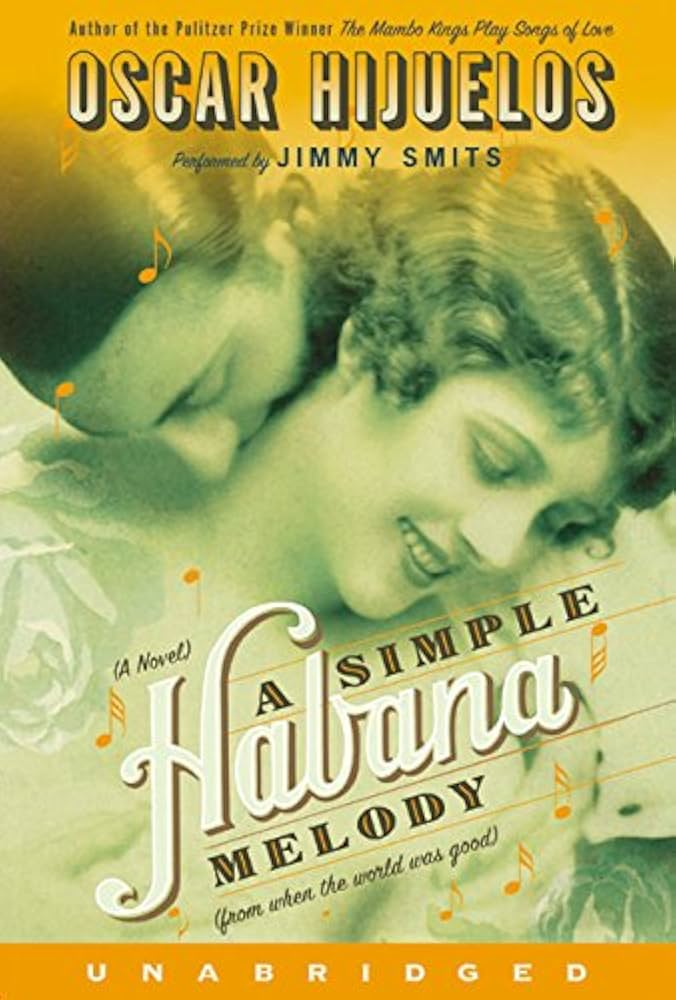
Oscar Hijuelos’ (Pulitzer prize-winning author of The Mambo Kings Play Songs of Love), A Simple Habana Melody is a nostalgic, lavish, and lush story about art, politics, religion, culture, family, war, and history; about different kinds of sex and sexuality; about women: (a broad spectrum ranging from the Virgin herself to all types of “putas”). But above all it is about music, music, music — especially what the music represents.
The book is anything but “a simple melody.” On the contrary, it is a very complicated, complex, and profound oratorio on life itself as seen through the eyes of an extraordinary man: “. . . my own protagonist . . . whose dreams are the dreams of those who the wish the world well.” (Author’s note.)
Israel Levis, Cuban composer, experiences life fully through the five senses. The reader can taste the wonderful food and drink (of which there are copious amounts), smell the aroma of the tropical flowers and the richness of Cuban coffees and cigars, feel the warm, soft sea breezes, see the bright floral colors and the sun’s rays glittering on the Caribbean sea. Most of all, the reader hears the music — the notes seem to flow off the pages — swaying shades and nuances and tones that never let go; instead they continue to haunt Levis and the reader, especially Rosas Puras (Pure Roses, and as the author also interprets: Pretty Roses.) This is Levis’ most famous song, played the world over, which he hurriedly wrote at the request of his undeclared love, Rita Valladares:”Rosas Puras. I had a melody that came instantly to me, arranged with the assistance of that unseen and underappreciated inspiration which can only come from God.” Thus, the composer identifies his most popular and enduring song with Rita, the love of his life.
So here we get to the essence of the story, which is love with all of its complicated facets. Love of country, of art, politics, religion, culture, family, and humanity itself. Overreaching it all, love for Rita: countless opportunities for Levis to connect deeply with that one other soul for whom he has had a lifelong yearning. Opportunities that he let slip by. Rather, he uses “memory as companion,” his diffidence and quiet reserve always and ever prohibiting him from declaring himself to his beautiful and flamboyant young protégé. (Perhaps he should have taken his lyricist friend Manny’s advice: “Live as if no one else matters.”)
The sad part is that Rita never was able to declare her love to him, either. Rather, she ran through four husbands (he never married), and died with “his name . . . never . . . far from her lips . . . crying with tender thoughts about him.”
“The purest rose will always last, like the love in our hearts.” To Israel and Rita, a simple Habana melody represented the deep and complex unrequited love that they had always carried for each other.
Not so simple after all.