
by Kerrin Ross Monahan
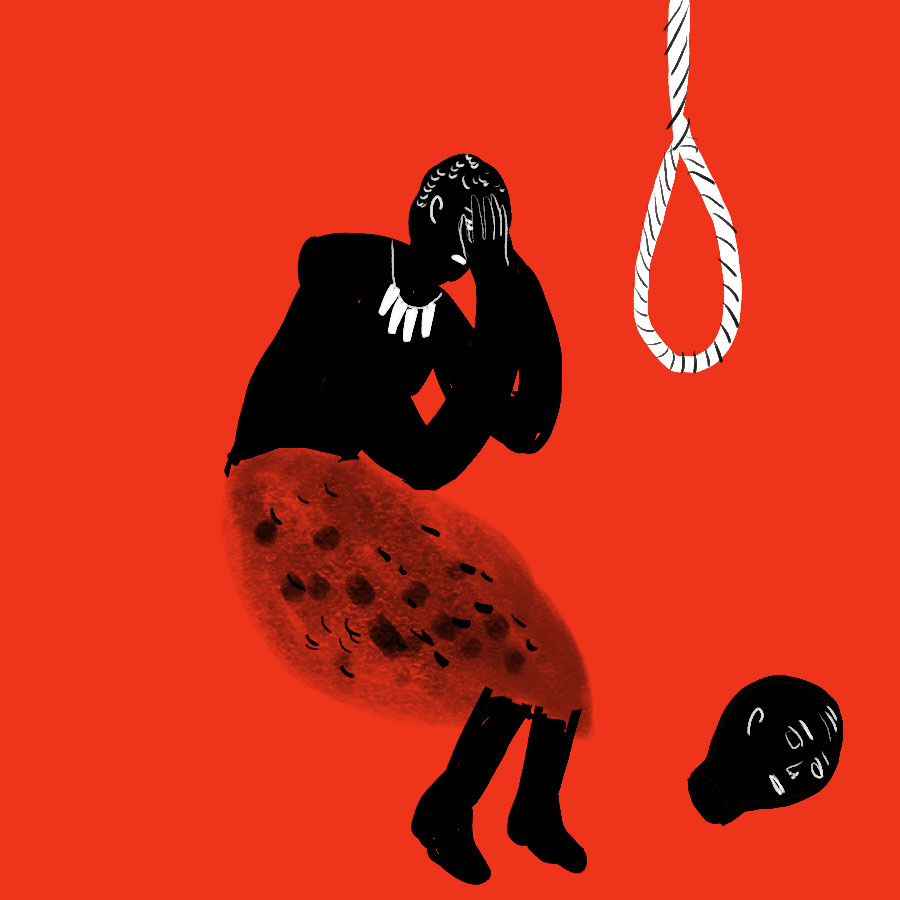
The Second Coming—William Butler Yeats 1920-21
(Refers to the promised return of Christ on Doomsday, the end of the world.)
Turning and turning in the widening gyre
The falcon cannot hear the falconer;
Things fall apart; the center cannot hold;
Mere anarchy is loosed upon the world,
The blood-dimmed tide is loosed, and everywhere
The ceremony of innocence is drowned;
The best lack all conviction, while the worst
Are full of passionate intensity.
This first part of Yeats’ poem expresses his personal feelings about the “dissolution of the civilization of his time, the end of one cycle of history and the approach of another.” At the time, Yeats felt that Western civilization was starting to collapse and that a new cycle of savagery was about to begin (Russian Revolution, rise of Fascism).
Things Fall Apart
Chinua Achebe was born in Nigeria in 1930, the son of a teacher in a missionary school. After graduating from college, Achebe taught in Nigerian Universities, co-founded a publishing company, and was a faculty member at the University of Massachusetts (Amherst), the University of Connecticut, and Bard College.
Things Fall Apart was Achebe’s first novel, published in 1958. He wrote two sequels to the book (featuring descendants of Okonkwo, the main character of Things Fall Apart): No Longer at Ease (1960), and The Arrow of God (1964). He has written several other novels (among them, Anthills of the Savanna (short listed for The Booker Prize), a volume of short stories, and many essays and poems. His works describe “the effects of Western customs and values on traditional African society,” and are the most translated of any writer of Black heritage in the world. Scholars and critics from thirteen countries of African life and literature, selected him as the writer of the best book written in the twentieth century, regarding Africa.
Achebe represents the social conscience of millions of people, a “cultural custodian,” a man of “rock-ribbed principles.” His universal and globalistic thinking necessarily allows his works to be beautifully transcendental. Achebe shows a true and clear understanding of mankind’s high morals, as well as its extreme shortcomings. These works have appealed to, and resonated with, millions of readers the world over—for more than forty-five years.
The protagonist of Things Fall Apart, the Nigerian warrior Okonkwo, suffered from the fatal flaw of a complete lack of femininity. This gentleness and softness, with all of its positive implications, had been totally found wanting in his character all of his life, and, as a result, he was wholly emotionally unbalanced. It is this lack of a feminine side—an implacable inflexibility and immovable rigidity—that led to his ultimate downfall.
Achebe used Yeats’ poem The Second Coming as a type of prologue (“. . . the worst [of men] are full of passionate intensity”). This phrase can certainly be applied to Okonkwo, and the British colonizers as well.
Okonkwo, “tall and huge,” was one of the most successful warrior-leaders in his tribe. At the age of eighteen he had become wrestling champion of the land, a feat still talked of with awe some twenty years later. He was one of the most prosperous men in his clan through dint of hard work, and was one of its ruling elders. However, his emotional make-up was such that the reader can actually track the progress of his breakdown from his early childhood on.
Unoka, Okonkwo’s father, was a lazy and improvident man who died heavily in debt, leaving his son to care for the remaining family members as best he could. All of his remaining years Okonkwo was to carry the shame and embarrassment created by this weak and worthless drinker. It was fortunate that in the Ibo tribe a man was judged solely on his own merits and not on those of an ancestor. What a man could make of himself was what counted. Okonkwo had two barns of yams, two titles, three wives who each had an obi (large living quarters) complete with attached hen-house, and, of course, several children. Okonkwo’s deep fear of failure and weakness, however, was to haunt him until his end: “It was deeper and more intimate that the fear of evil and capricious gods and of magic, the fear of the forest, and of the forces of nature . . .” (16-17).
Okonkwo’s father Unoka did have some good qualities and those were the ones that Okonkwo should have possessed but did not. His father was an ardent lover of nature: “He loved this season of the year, when the rains had stopped and the sun rose every morning with dazzling beauty” (8). “He loved the first kites . . . and the children who sang songs of welcome . . .” (9) “. . . . And his happiest moments were . . . when the village musicians brought down their instruments . . . Unoka would play with them, his face beaming with blessedness and peace” (8). Okonkwo had learned to “hate everything that his father Unoka had loved . . . one of the things was gentleness . . . (17).
Unfortunately for him, he refused to embrace any of these caring, feminine qualities.
Although the Ibo tribe regarded conversation as a high art, Okonkwo was never happy simply sitting and talking; he was not a man of thought, but of action, who felt much more comfortable working (38). He also had a stammer which frustrated him so that he would use his fists as a substitute for reasonable words.
Okonkwo considered showing affection to be a “sign of weakness” (30), so he kept any positive emotions to himself. Although inwardly pleased at his young son Nwoye’s development (51) he kept it bottled up. (Although note his later rage at the mature Nwoye’s actions.) Inwardly he knew his sons were too young to completely understand the intricacies of yam planting (34) and he never “showed any emotion openly unless it be the emotion of anger” (30). Okonkwo’s desire for “conquering and subduing” is equated with the physical desire for a woman, and he stated that if a man “was unable to rule his woman and his children he was not really a man” (52). He regarded Nwoye as having “too much of his mother in him,” and insisted that he listen to only “masculine stories of violence and bloodshed,” instead of the folktales of his mother, that Nwoye much preferred.
Okonkwo did show a bit of humanity when his favorite daughter was desperately ill (“he had become gravely worried”) (106), and also when she was carried off by the Oracle; but this was because he had always wished that she had been a boy, and because he was so disappointed in his “degenerate” and “effeminate” son, Nwoye (143).
Okonkwo had survived the hard early years of young adulthood by his “inflexible will,” but it is this self-same will that was to undo him in the end. He mistook flexibility and compromise for weakness and indecisiveness. Total masculinity in his mind meant total success. Other tribal leaders, however, did not by any means go along with this thinking and there are many examples in the text that show within the framework of his tribe’s customs, many of Okonkwo’s actions ran counter to them. When he beat one of his wives during “peace week,” a taboo action, he was brought to task for it, and, although, again inwardly repentant, “he was not the man to go about telling his neighbors that he was in error” (32). We see, in another instance, that the village judges decided in a woman’s favor and even threatened her husband with castration if he should seek retribution (88).
When Okonkwo rudely told a fellow tribesman that “this meeting is for men,” he was chastised by the others (28). He also went against tribal wisdom when he accompanied the group who led his “foster” son Ikemefuna to his death in the forest. The elder Ezeuda had previously warned him not to have anything to do with the boy’s death (55). To make matters worse, Okonkwo, out of fear of appearing weak, delivered the second machete blow, the coup de grâce, and was roundly criticized by his friend and peer Obierika: “If I were you I would have stayed at home . . . nor be the one to do it” (64, 65).
At the revered elder Ezeudu’s funeral, Okonkwo very carelessly allowed his gun to go off, killing the dead man’s young son. Although this was considered an “inadvertent” or “female” crime, the clan laws stated that Okonkwo and family must be exiled to his mother’s land for seven years.
Okonkwo’s uncle summarized the tribe’s view of womanhood, and it is here that the reader readily sees the crystallization of tribal thought. Uchendu presents a woman as supreme (“Mother is Supreme”), to be regarded as a safe haven; offering warmth and sympathy and protection in a harsh world; as a rejuvenator. Even after being exiled and after his return, Okonkwo still did not understand this necessary concept, this essential ingredient in balancing man’s nature.
The greatest example of Okonkwo’s obstinacy was when he refused to accept, however reluctantly, the presence of the white men and their Christianity in his midst. The other elders had gradually realized that they must compromise in order to survive; adaptability is the key to survival. They felt that the “usefulness of the whole” (the community) was of paramount importance. They would gain nothing by resisting. Once again, Okonkwo’s rigidity and unthinking rage were responsible for his ultimate undoing. He knew his peers were not going to fight against the District Commissioner’s troops and yet he would not bend.
The first missionary, the Englishman Mr. Brown, offered “compromise and accommodation” (109). The second missionary, the inflexible Mr. Smith (like Okonkwo) precipitated the final confrontation. It is also ironic that Okonkwo’s son Nwoye found “poetry” in this new “soft” religion of Christianity and became a fervent disciple. He found in this new religion all that was lacking in his father.
Further irony is seen in the fact that, due to Okonkwo’s complete rejection of any feminine attributes, he felt he was forced to commit suicide, which was taboo.
Let it be noted that Great Britain, which colonized Nigeria, had been ruled by a woman for the past sixty years—a queen whom many considered to be the greatest leader England had ever had. Certainly Queen Victoria presided over the most incredible economic expansion ever witnessed up to that time. (Not forgetting Queen Elizabeth I, who, in effect, had started English colonialism.) It also must be noted here that African tribes had been forcibly colonized by various European powers for many years, before this story takes place (1890). All factions of the colonists (political, business, religious, and, of course, military) arbitrarily sought expansionism for their own ends, not taking into account any individual clans’ or nations’ religious or social and cultural mores, but summarily dismissing same, in order to impose Western rules and regulations which they thought were far superior. These imperialists also carved up lands, shifted borders, and moved old established boundaries, on other continents, in a completely arbitrary manner without consulting those countries’ leaders. (The U.S. is not immune to criticism, case in point: Hawaii, and potentially, Iraq.)
Getting back to Yeats; this time to the last two lines, (which might well be considered today as ominous foreshadowing):
“And what rough beast, its hour come round at last,
Slouches towards Bethlehem to be born?”
Looking at the present political/military world situation, it would be a good idea if more male leaders would allow their feminine sides to come to the fore, and that more women of the world be in position of leadership, so that patience and reason could be balanced fairly against mindless passion. Then global confrontations, which would inevitably lead to irreparable damage too catastrophic to imagine, could be avoided and the world could then live in peace.
Chinua Achebe certainly knew what he was talking about when he related to his readers the song that the Ibo tribe sings whenever a woman dies:
“For whom is it well, for whom is it well?
There is no one for whom it is well” (125).
Pax Vobiscum.
Deus miseratur.
Bibliography
Achebe, Chinua. Things Fall Apart. 5th printing. New York: Fawcett Crest Books (published by Ballantine Books) December 1984.
The Norton Anthology of English Literature. 3rd ed. New York: W.W. Norton & Company, Inc., 1975.